If you live anywhere near the coast in South Carolina, you already know the drill — a storm rolls through, the wind picks up, and afterward you walk outside and just… look up at your roof, hoping everything’s still where it’s supposed to be. Most of the time it looks fine from the ground. That’s actually part of the problem.
A lot of roof damage isn’t obvious unless you know what you’re looking for, and some of it doesn’t show up as a leak until months later, usually right when you least want to deal with it.
Start with what you can actually see from the ground.
Walk around your house and look at the shingles. You’re checking for spots that look darker or shinier than the rest of the roof — that usually means granules got knocked loose, which happens a lot during hail or high wind. You’re also looking for shingles that are curling up at the edges, or ones that look like they’re missing entirely, especially near the edges of the roof or around any vents and the chimney.
Check your gutters too, while you’re at it. If you see a bunch of little granules sitting in there like coarse sand, that’s shingle granules that got knocked off, and it’s a pretty reliable sign your roof took a hit even if nothing looks dramatically wrong yet. It doesn’t have to be pouring in for it to be a real problem — a slow leak that’s been dripping into your insulation for two months does more damage than one big storm ever could.
If you can get into the attic, look for any spots where you can see daylight coming through, or wood that looks darker/wet compared to the rest.
Here’s the thing about wind damage specifically.
Wind doesn’t always rip a shingle clean off. A lot of the time it just loosens the seal underneath without actually removing anything, so the shingle looks totally normal sitting there, but the wind’s already broken the bond that keeps water out. You genuinely cannot always tell this from a photo or from the ground. This is the main reason we tell people not to just eyeball it themselves after a bad storm and call it good — it’s also usually why insurance adjusters want an actual roofer’s inspection report, not just your description of what you saw.
What we do when you call us out
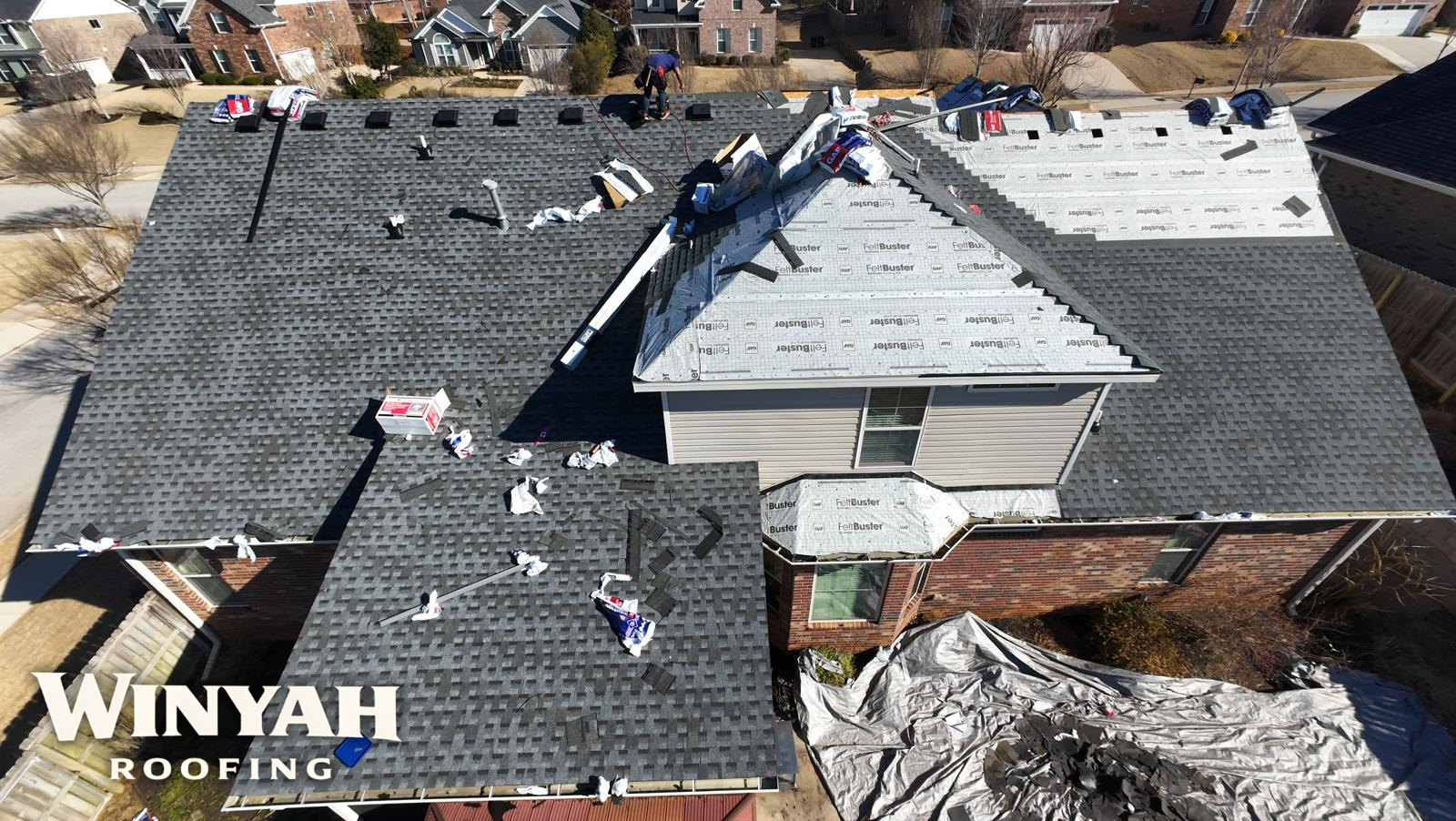
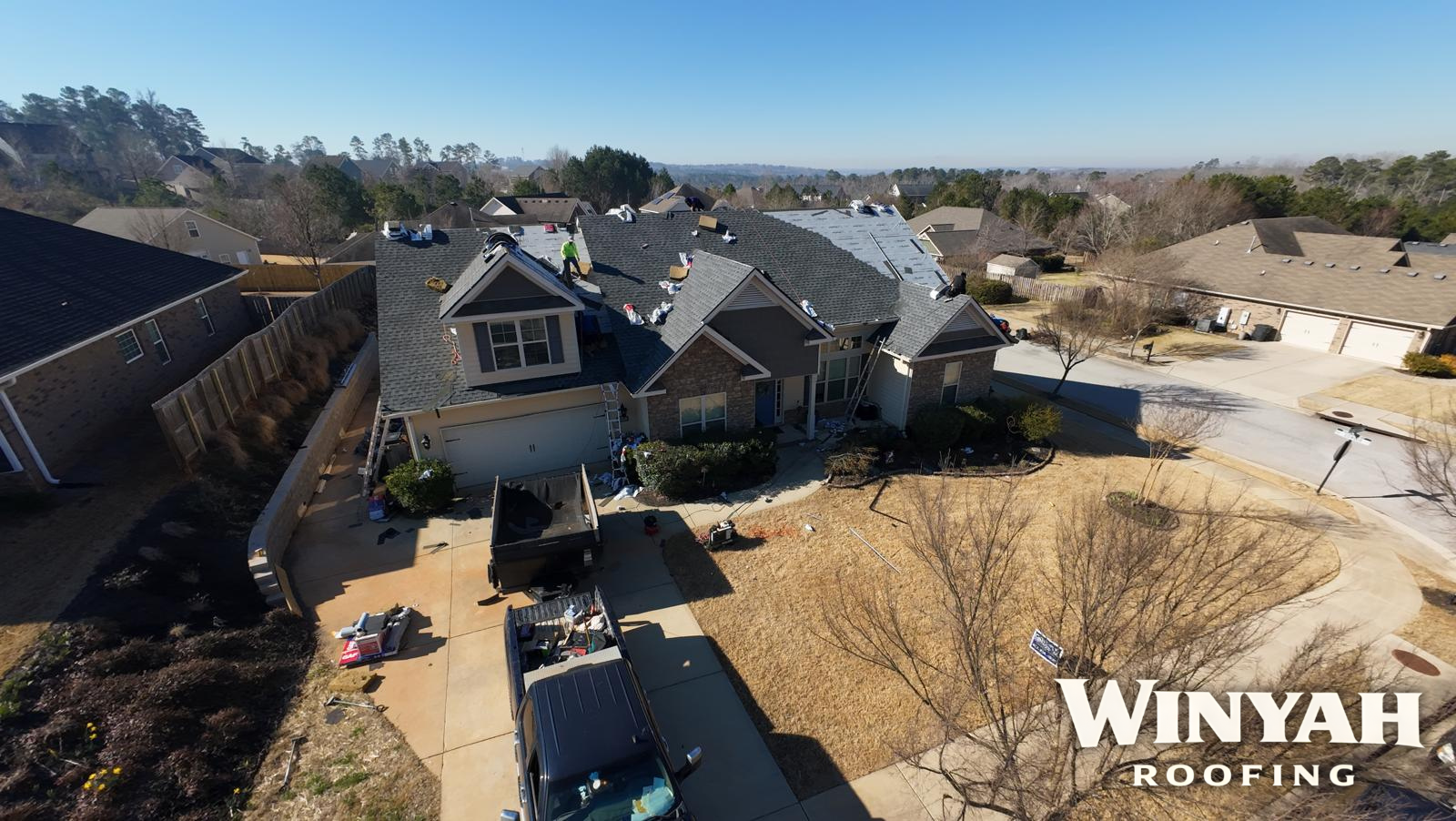
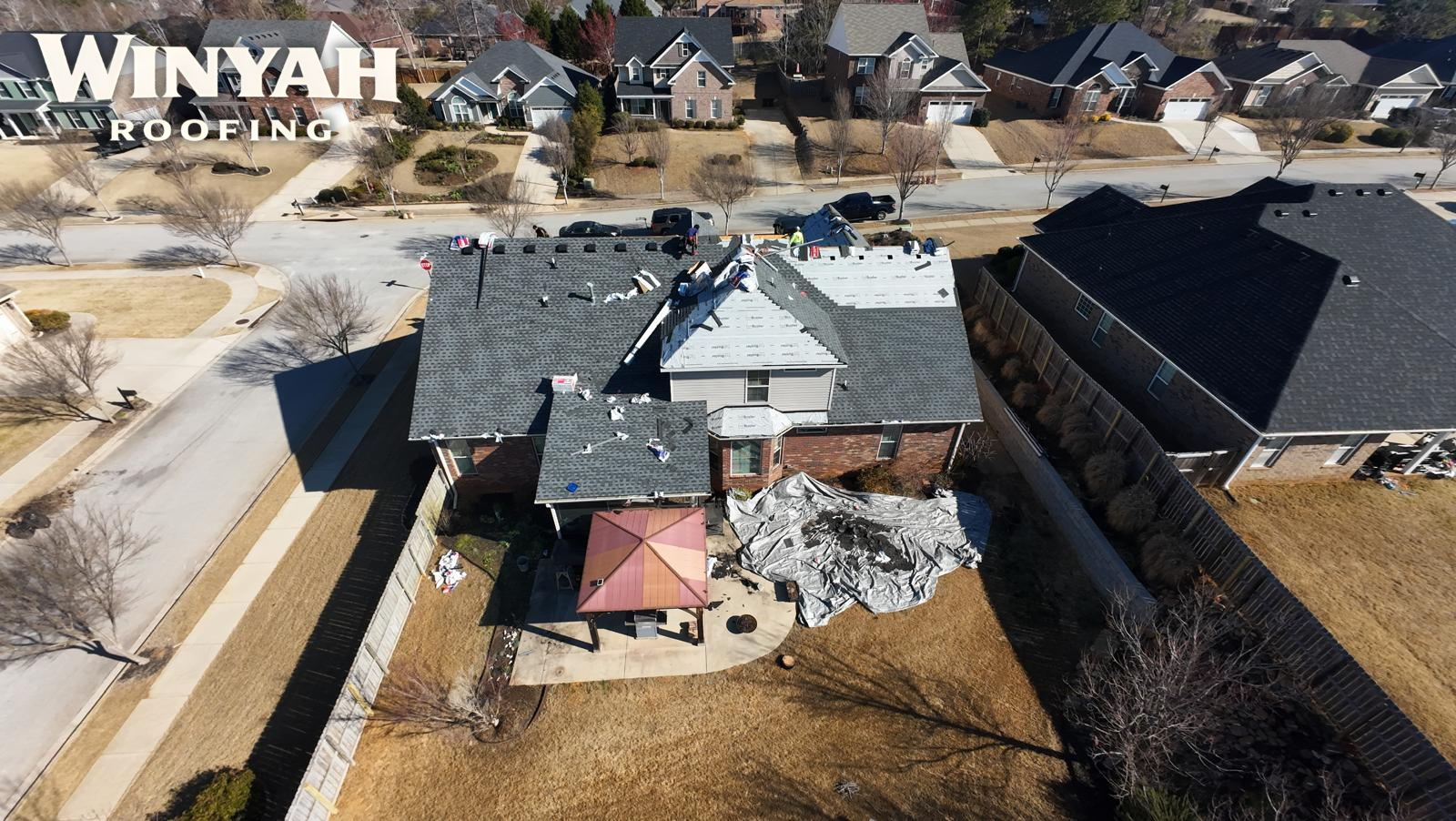
We come out, get up there, and check the stuff that’s hard to see from the ground — the seal on each shingle, flashing around chimneys and vents, valleys where two roof slopes meet (those leak more than anything else), and the attic from the inside if we can access it. If there’s damage, we document it properly with photos, which matters a lot if you end up filing an insurance claim.
Being GAF Certified means we’re held to their inspection and installation standards, and it’s also what lets us offer their stronger warranty options if you do end up needing a repair or replacement.
If a storm just came through, don’t wait on this.
Small stuff turns into rotted decking and mold a lot faster than people expect, especially in this climate. Give us a call and we’ll come take a look — the inspection doesn’t cost you anything, and at the very least you’ll know exactly where you stand.